


Since IZ’s global hit, the famous “Somewhere Over the Rainbow,” everyone has heard of the ukulele. Who hasn’t shed a tear, thinking of a loved one or a melancholic memory, soothed by the pure sound of the Hawaiian prodigy? His talent, directly proportional to his body mass (at the end of his life, he weighed 343 kg!), propelled him and his instrument of choice to the forefront of the international stage.
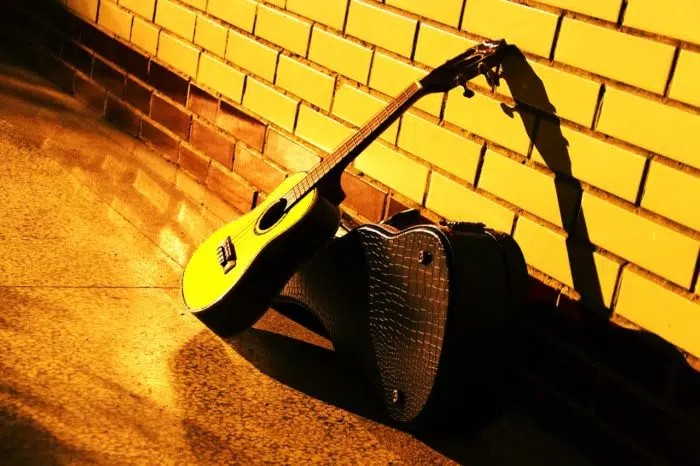
Yet the ukulele, although a relatively recent invention, had long been known to musicians and had already achieved several notable successes. This renewed popularity resonated with the general public, and since then the ukulele has become an instrument that is both exotic and appreciated everywhere, much like the djembe was in its time… So, for those who wish to strum its strings, let’s take a brief look back at its origins before discussing purchasing one…
What is a ukulele?
The ukulele is an adaptation of the Portuguese cavaquinho, and more specifically of the Madeiran version, the machete. It is believed to have been introduced to the island by Portuguese immigrants who came to cut sugarcane in 1879. According to the American perspective, its conquest of the world then followed three major periods of expansion:
- The first would be due to the 1915 World’s Fair: the Hawaiian pavilion, enhanced by its musicians, was a huge success, and artists such as Cliff Edwards or Roy Smeck, won over by the instrument’s very particular sound, decided to adopt it;
- Strangely, the second wave would be the corollary of the invention of the plastic ukulele! Arthur Godfrey was the promoter of the instrument during this period, which began to decline from the 70s onwards;
- The origins of the third wave still fuel debate; however, experts all agree on one point. Israel Kamakawiwoʻole was one of the major players in this latest global surge of the ukulele.
This instrument, both unassuming in size and intriguing in its sound, has had several lives. At different times, the ukulele was indispensable to jazz bands, adding a touch of lightness to their performances; then it became the emblem of a rebellious youth yearning for change, before finally propelling its cultural origins into the media spotlight. Today, many musicians want to learn this instrument. To help them, we’ve created this short guide to best practices for choosing your first instrument.
Choosing Your First Ukulele
Choosing your instrument depends first and foremost on how you intend to use it and your musical experience. There are good instruments at very affordable prices that are perfect for beginners. However, experienced guitarists will often prefer to invest in ukuleles made from higher-quality woods and with more refined finishes. You should pay particular attention to three points:
- Accuracy: beware of “camembert boxes” from which it is impossible to get a correct sound; the quality of the wood used is often the cause;
- The finish of the mechanics: poor-quality ukuleles tend to go out of tune constantly;
- The size of the instrument: there are three main ones, Soprano, Concert and Tenor, from the highest to the lowest sounds.
To ensure a smooth first purchase, it’s important to consult professionals. You can contact Lordel Musique, a company renowned for its wide and varied selection and the quality of its services.
Learn and progress?
Learning music requires, above all, time and discipline. That’s why the support of a teacher is often welcome. Unfortunately, due to lack of time, money, or even motivation, it’s sometimes difficult to enroll in a traditional class. Thanks to the internet, it’s now easy to learn music from home, at your own pace, and effectively. That’s why this kind of page, packed with information and tips, exists and is meant to be shared! And who knows, one day you might become the next Julien Doré! In any case, we wish you a successful career…

